Definition
Virtual memory is a fundamental mechanism within modern computer architectures that enables the translation of virtual addresses—those used by programs during execution—into corresponding physical addresses, which refer to actual locations in the physical memory hardware, typically implemented with DRAM (Dynamic Random-Access Memory).
This translation process, known as memory mapping, serves as the cornerstone of how applications interact with the system’s memory resources.
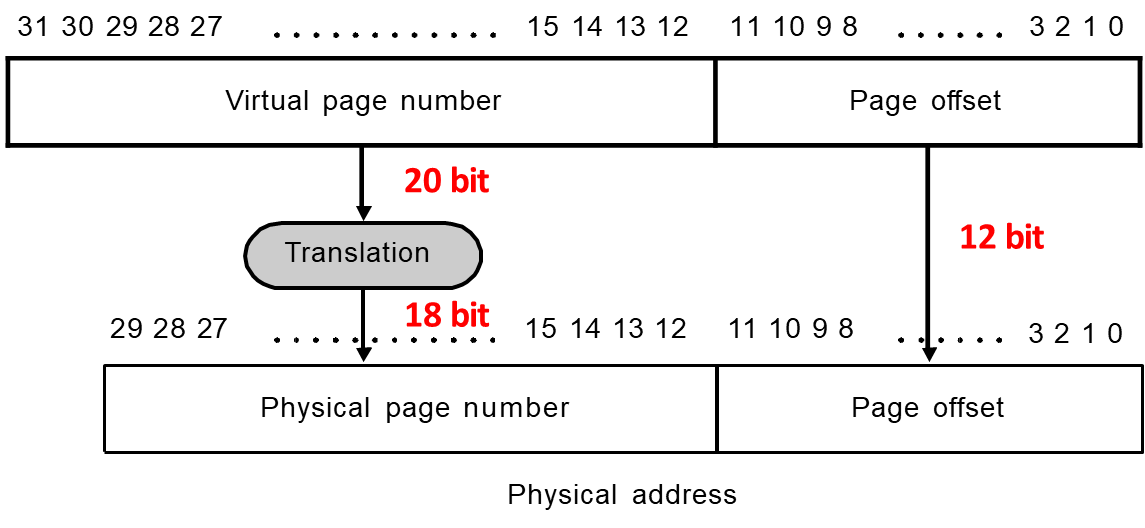
One of the most significant motivations for introducing virtual memory lies in the disparity between the vast memory requirements of modern software applications and the relatively limited size of available physical memory. The virtual address space made accessible to each process is designed to be much larger than the total capacity of the physical memory installed in a system. This abstraction allows applications to operate as if they have access to a large, contiguous block of memory, even though, in reality, only a portion of their data is actively held in main memory at any given time.
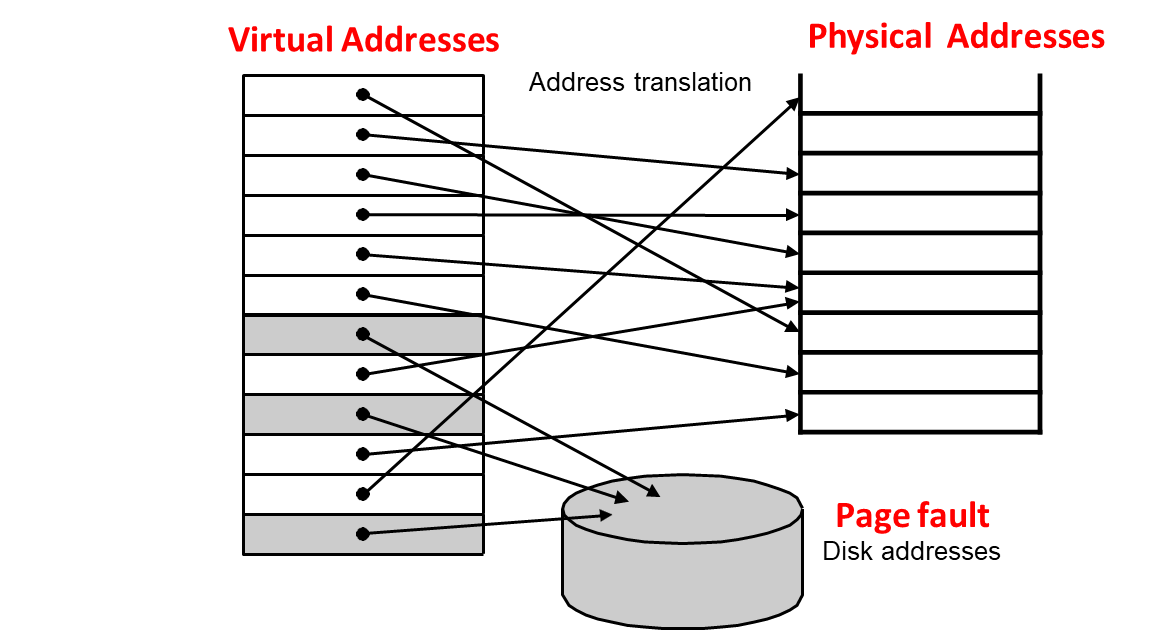
This architectural choice becomes essential in multitasking environments, where multiple processes execute concurrently and must share the limited physical memory. In such scenarios, only the currently active portions of each process—commonly referred to as the working set—are maintained in the physical memory. The remainder of the program’s memory content is temporarily stored on secondary storage devices, typically on a hard disk or SSD. The virtual memory mechanism is responsible for swapping data in and out of physical memory as needed, thereby ensuring that the system can handle more data than it could if confined strictly to the installed RAM.
From a conceptual standpoint, virtual memory extends the idea of caching: just as hardware caches use fast memory to temporarily store frequently accessed data from main memory, virtual memory treats physical memory itself as a cache for even larger secondary storage devices like disks. Here, the memory blocks are referred to as pages, and each page corresponds to a fixed-size block of memory. When a program tries to access a page that is not currently loaded in physical memory—a situation known as a page fault—the operating system retrieves the needed page from the disk and updates the memory mapping accordingly.
Page Table
The technical implementation of address translation relies heavily on the Page Table, a per-process data structure that manages the mapping between virtual page numbers (VPNs) and physical page numbers (PPNs). Each process is assigned its own page table to ensure isolation and correctness in address translation. The page table itself resides in main memory, and the system maintains a special register, called the Page Table Register, that holds the base address of the current page table being used.
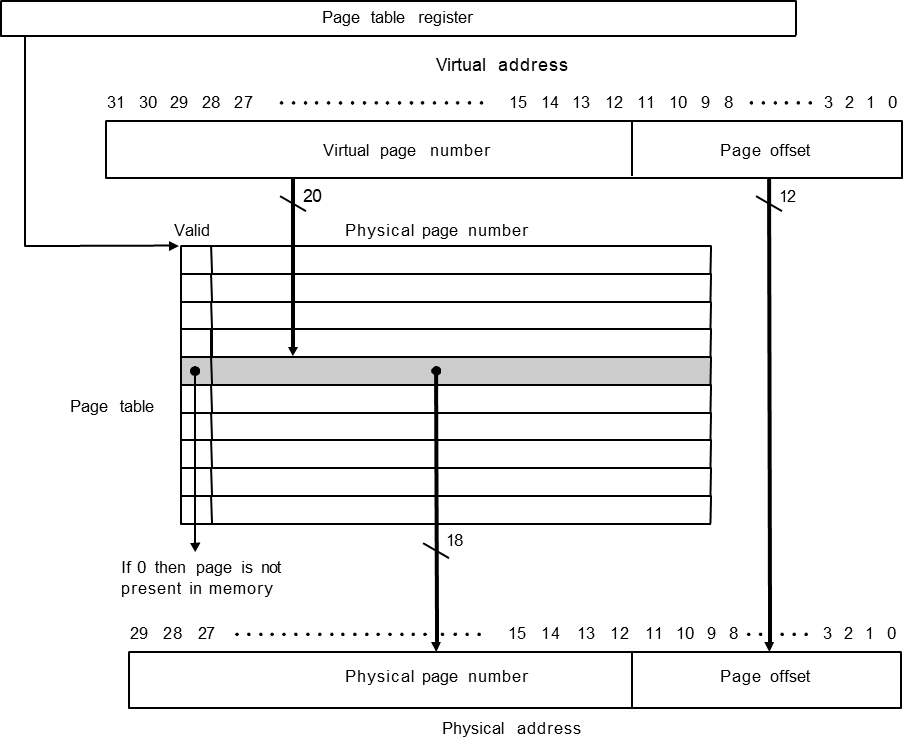
When a process accesses a virtual address, the system uses the virtual page number as an index to consult the page table. Each entry in the page table provides the corresponding physical page number if the page is currently in memory. Additionally, every page table entry includes a validity bit, which indicates whether the referenced page is actually present in physical memory. If the bit is unset, the system triggers a page fault, and the corresponding page must be loaded from disk before the process can continue execution.
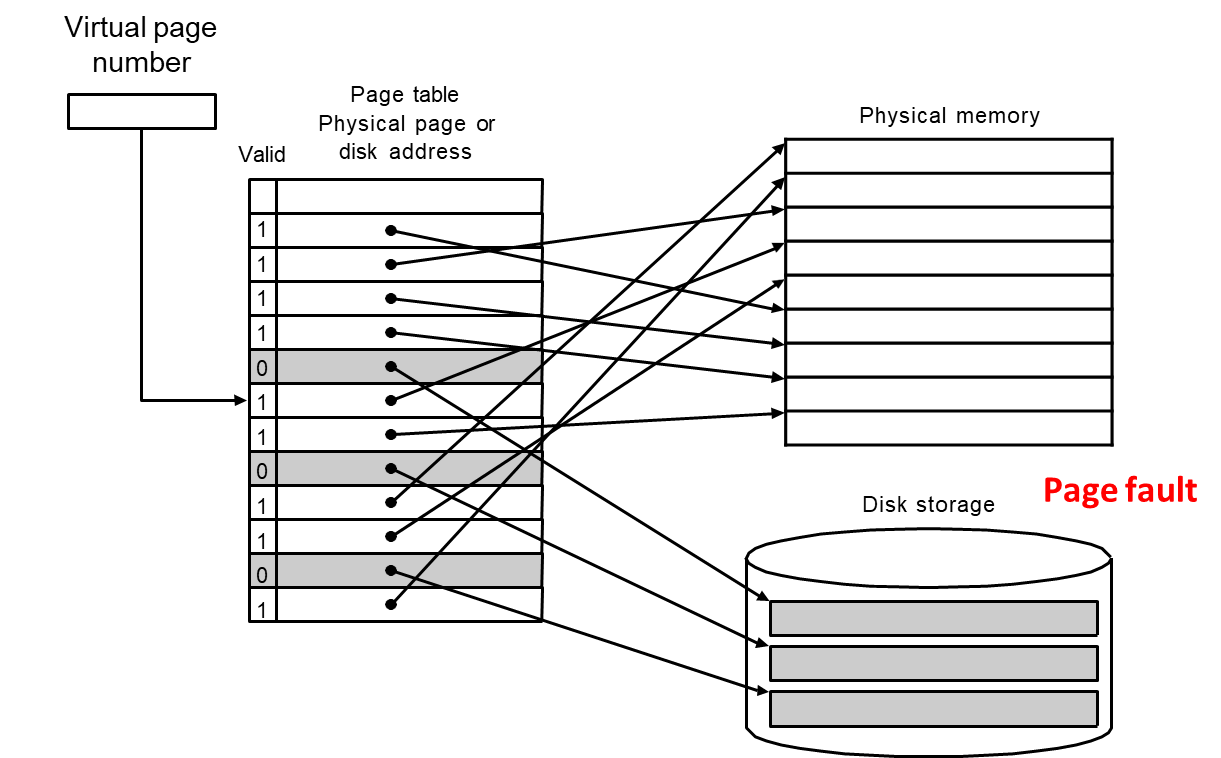
This mechanism ensures an efficient, transparent, and secure method for managing memory in complex computing systems. It enables multitasking, memory protection, and the illusion of an abundant memory space, all while leveraging relatively limited physical resources. Through virtual memory and its underlying structures, operating systems can deliver performance and functionality that would otherwise be unattainable with direct, unrestricted access to physical memory alone.
Translation Lookaside Buffer (TLB)
To ensure that address translation does not become a performance bottleneck in modern processors, especially when working with virtual memory, specific hardware mechanisms are employed to speed up the translation process between virtual and physical addresses. Without optimization, each memory access would require two separate memory operations: one to access the page table and retrieve the physical address, and a second to use that physical address to access the actual data in main memory. This doubling of memory accesses would significantly degrade performance.
However, systems leverage the principle of temporal locality, which suggests that if a particular virtual-to-physical address translation has been used recently, there is a high probability it will be needed again soon. Based on this observation, modern computer architectures incorporate a specialized cache called the Translation Lookaside Buffer (TLB).
Definition
The TLB is a small, high-speed associative memory that stores a limited number of recent address translations from the page table. By caching these translations, the system can avoid repeated access to the page table in main memory. Typically, TLBs contain around 128 to 256 entries and are fully associative, allowing them to quickly search all entries in parallel to find a match for the virtual page number.
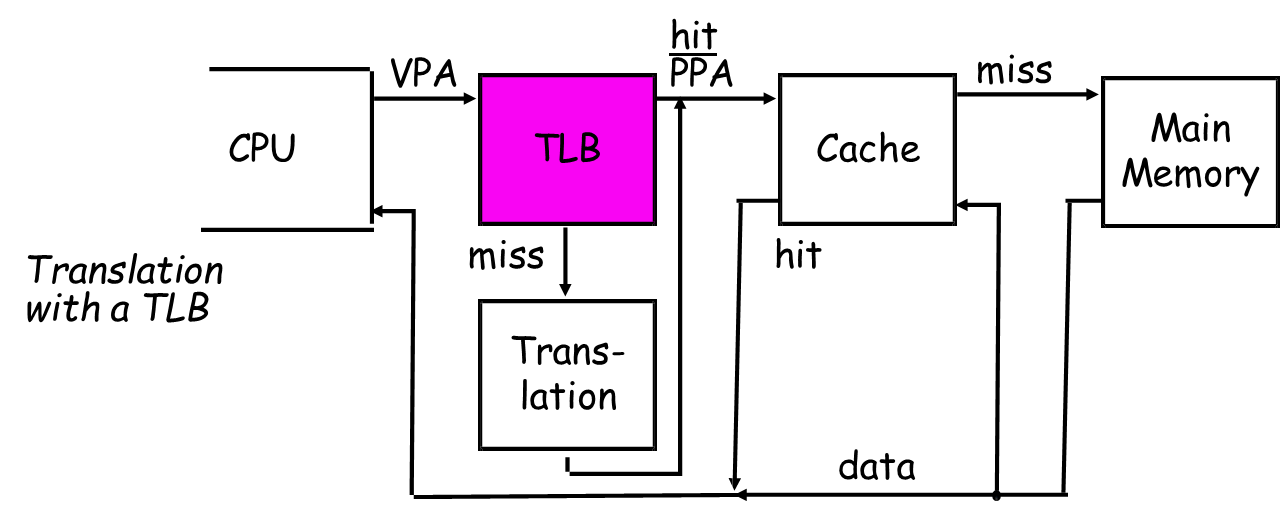
When the CPU attempts to translate a virtual address, it first checks the TLB.
- If the required translation is present—referred to as a TLB hit—the system can immediately obtain the corresponding physical address and access the data in main memory without any additional delay.
- If the translation is not found in the TLB—a TLB miss—two scenarios are possible:
- if the required page is present in memory, the system will retrieve the translation from the page table and load it into the TLB for future use.
- if the page itself is not in memory, a page fault occurs, and the operating system must intervene by activating a Page Fault Handler to load the page from disk into memory.
To further reduce latency, modern architectures integrate the TLB with the data cache and main memory system. A key innovation here is the overlapping of TLB lookup and cache access. Since the page offset—the lower portion of the virtual address—is identical in both the virtual and physical addresses, it can be used immediately to index into the cache while the rest of the virtual address is still being translated. This optimization allows the cache to begin searching for the data in parallel with the TLB translation process.
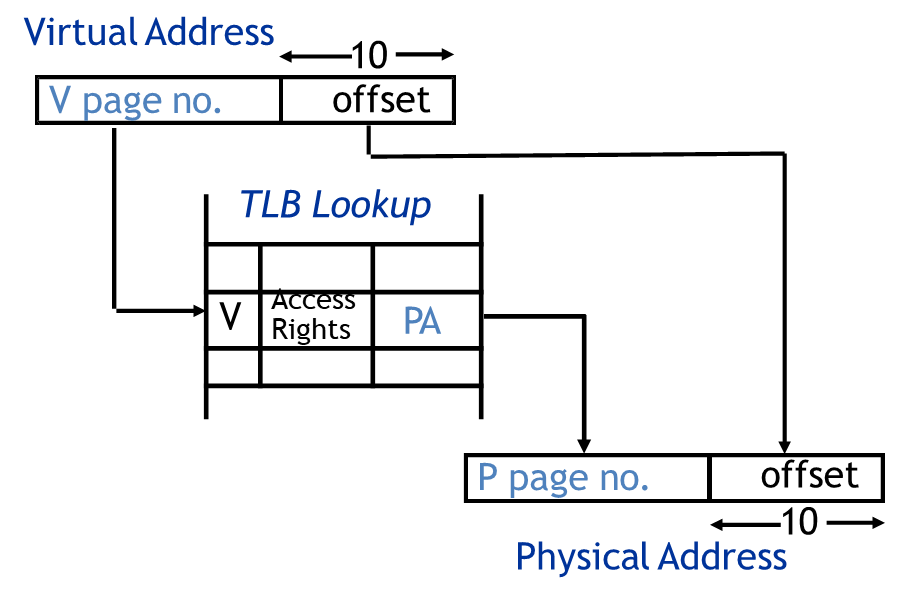
This leads to the concept of a virtually indexed, physically tagged cache. In this design, the index used to access cache blocks is derived from the page offset, which is invariant across address translation. The tag comparison is done using the physical address once the translation is complete. By initiating the cache lookup in parallel with the TLB lookup, the processor reduces memory access time and improves overall efficiency.
However, this strategy has constraints related to cache size and associativity.
Example
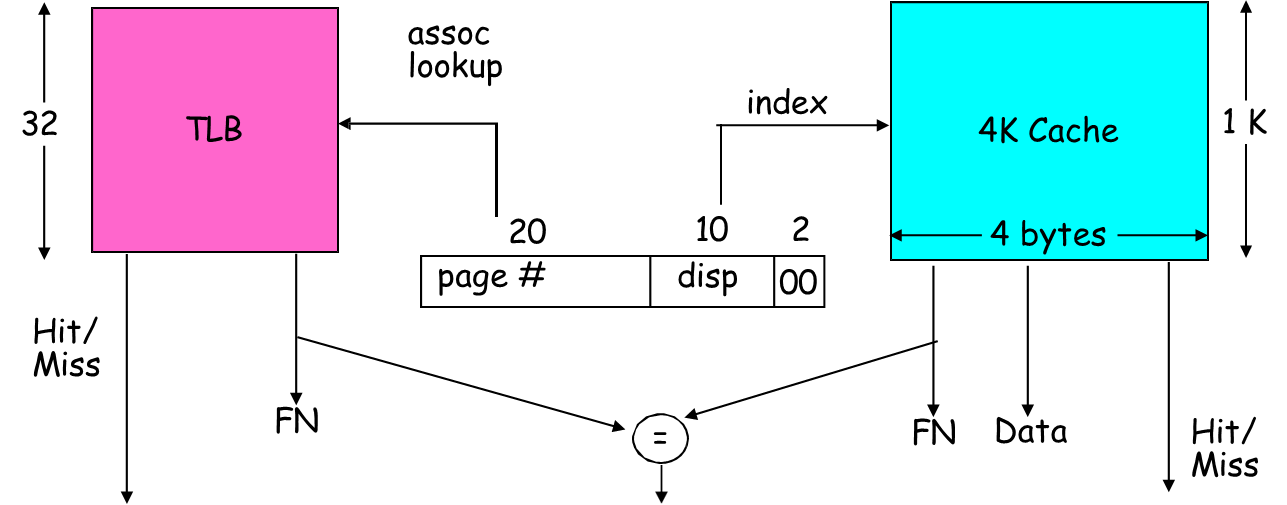
For example, with a 4 KB page size, overlapping TLB and cache access is straightforward for caches up to 4 KB. But as the cache size grows—say to 8 KB or beyond—the overlapping may become incomplete due to indexing conflicts.
Cache Virtually Indexed and Physically Tagged
When designing high-performance systems that implement virtual memory, one critical architectural decision revolves around how the cache interacts with address translation. A commonly used approach is the virtually indexed, physically tagged cache. In this design, the cache uses the page offset—which remains unchanged during virtual-to-physical translation—to index entries. However, the tag comparison, which determines if the data in cache corresponds to the requested address, is performed using the translated physical address. This approach allows for overlapping the translation process and the cache access, thereby reducing latency.
Despite its efficiency, this design presents limitations. A significant drawback arises from the fact that the cache indexing depends on the page size. For direct mapped caches, the page size imposes a hard limit on the cache size. Specifically, the portion of the address used for indexing must remain unchanged during translation; otherwise, the cache may index into the wrong block. As a result, increasing the cache size while maintaining direct mapping becomes problematic.
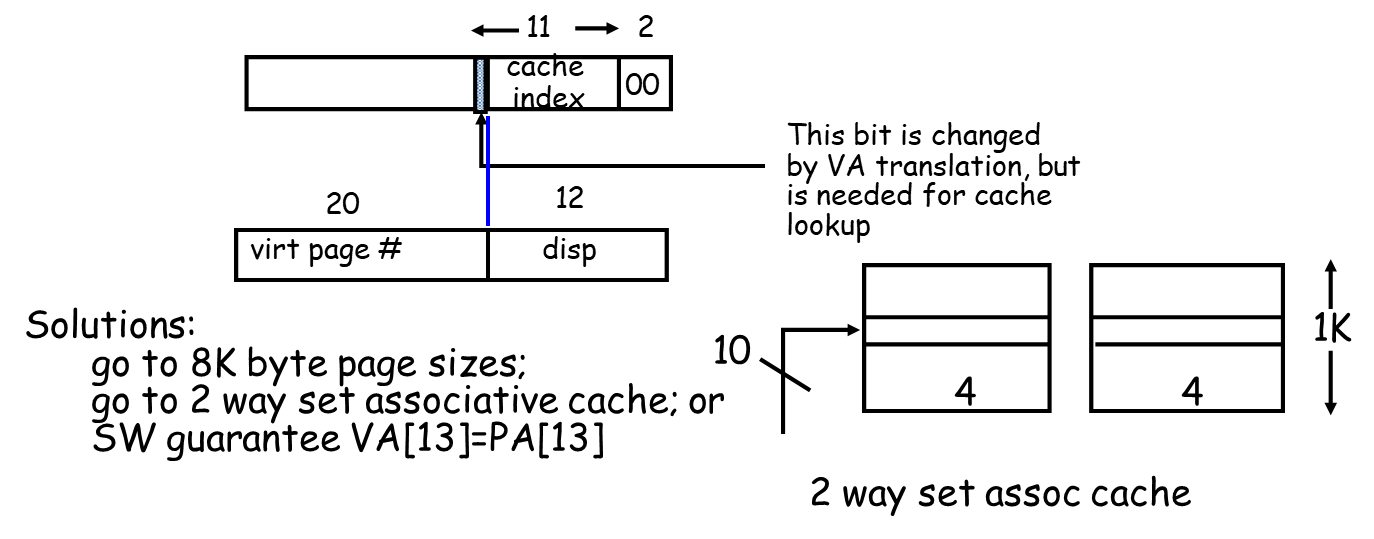
One way to overcome this constraint is to increase the cache’s associativity. By using a set-associative structure—where each set can store multiple blocks—conflicts are reduced, and the cache can grow in size without compromising the correctness of address translation. Another alternative is to use virtual caches, or virtually addressed caches, where the tags themselves are virtual addresses. In this model, the cache lookup occurs entirely using virtual addresses, and address translation is only performed on a cache miss. While this method avoids the need to translate on every access, it introduces its own challenges, particularly with memory protection and synonym problems (when different virtual addresses map to the same physical address).
Overlapping TLB and cache access also introduces other technical complexities. In order for the overlap to work correctly, the address bits used to index into the cache must remain unchanged by the translation process. This generally restricts system designers to small caches, large page sizes, or highly associative caches.
Example
For example, increasing the cache size from 4 KB to 8 KB could violate this constraint unless mitigated by higher associativity or architectural adjustments.
Advantages of Virtual Memory
Beyond performance concerns, virtual memory offers three major advantages that contribute to its central role in system design.
- Address Translation: Virtual memory provides a consistent and isolated view of memory for each program, allowing for efficient multitasking and dynamic memory allocation. This abstraction enables processes to operate in their own virtual address space, making it easier to manage memory and allowing for flexible data structures like stacks that can grow dynamically.
- Protection: Virtual memory enhances system stability and security by isolating processes from one another. Each process operates in its own address space, preventing unauthorized access to memory regions. This isolation is crucial for maintaining the integrity of the operating system and protecting against malicious software.
- Sharing: Virtual memory allows multiple processes to share the same physical memory page, facilitating efficient inter-process communication and resource sharing. This capability reduces memory duplication and overhead, enabling applications to access shared libraries or data without requiring separate copies in memory.