Data Lake and Data Warehouse
In modern data management, data warehouses and data lakes serve distinct but complementary purposes, enabling organizations to store, process, and analyze data efficiently. While both provide centralized repositories for enterprise data, they differ significantly in structure, processing methodology, and use cases. Understanding their roles and integration strategies is crucial for designing scalable and efficient data architectures.
Data Warehouse
A data warehouse is a centralized system designed to store large volumes of structured data gathered from various sources within an organization. Unlike transactional databases, which focus on real-time processing, a data warehouse is optimized for analytical queries, business intelligence, and reporting. It enables organizations to analyze historical data, identify trends, and support decision-making processes.
Data within a warehouse is highly structured and processed before being stored. The process of ETL (Extract, Transform, Load) is commonly used to clean, format, and optimize data, ensuring it is consistent and ready for analysis. Due to this structured nature, data warehouses provide fast query performance, making them ideal for generating reports and running complex analytical queries across different business functions.
One of the key strengths of a data warehouse is its schema-on-write approach. This means data must be structured and formatted according to a predefined schema before being loaded into the system. This structure enhances data integrity, governance, and reliability, making data warehouses the preferred solution for industries requiring high levels of data standardization and compliance, such as finance, healthcare, and retail.
However, data warehouses have limitations. Their rigid schema makes them less adaptable to unstructured or semi-structured data, such as logs, sensor data, or multimedia files. Additionally, the ETL process can be time-consuming and costly, particularly when dealing with rapidly growing datasets.
Data Lake
A data lake is a centralized storage system designed to handle vast amounts of raw, unstructured, semi-structured, and structured data. Unlike data warehouses, data lakes do not require data to be preprocessed before storage. Instead, they use a schema-on-read approach, allowing data to be stored in its original format and structured only when needed for analysis.
This flexibility makes data lakes highly suitable for big data applications, machine learning, real-time analytics, and exploratory analysis. Organizations dealing with large and diverse datasets—such as sensor data from IoT devices, clickstream logs, videos, and social media feeds—benefit from the scalability and cost-effectiveness of data lakes.
However, while data lakes offer great flexibility, they require careful data governance, security, and quality management. Without proper oversight, they can become data swamps, where vast amounts of unstructured data accumulate without meaningful organization, making retrieval and analysis difficult. To address these challenges, organizations often implement metadata management, data cataloging, and governance frameworks to ensure that data remains discoverable, secure, and usable.
Data Lakehouse
Rather than choosing between a data warehouse and a data lake, many organizations adopt a hybrid approach—often referred to as a lakehouse architecture—which leverages the strengths of both systems.
In this model, raw data is first ingested into the data lake, preserving its original format and structure. The data lake acts as a staging area, where large datasets can be stored before further processing. ETL or ELT (Extract, Load, Transform) pipelines then filter, clean, and structure relevant data, moving it into the data warehouse for business intelligence and reporting.
This integration provides organizations with the ability to:
- Store vast amounts of raw data for future analysis without immediate processing constraints.
- Transform and optimize structured data for fast queries and reports in the data warehouse.
- Enable advanced analytics and machine learning by utilizing both structured and unstructured datasets.
By combining both storage paradigms, organizations can create a scalable and flexible data architecture that supports diverse analytical needs, ranging from real-time processing to long-term historical analysis.
Polyglot Persistence
In the realm of modern data management, polyglot persistence refers to the practice of using multiple database technologies to handle different types of data storage and retrieval requirements. Rather than relying on a single database system for all use cases, organizations select the most appropriate database technology for each specific workload, ensuring optimal performance, scalability, and efficiency.
The term “polyglot” originates from linguistics, meaning the ability to speak multiple languages. In data management, it signifies the ability to use multiple database systems, each suited for a particular type of data or query pattern.
Traditional relational databases (SQL-based systems) are highly structured and excel at transactional integrity, consistency, and complex queries. However, modern applications often deal with diverse data types, including:
- Structured Data (e.g., customer records, financial transactions)
- Semi-Structured Data (e.g., JSON, XML files)
- Unstructured Data (e.g., images, videos, logs, social media feeds)
Different database technologies are optimized for different use cases. For example:
- Relational Databases (RDBMS) such as PostgreSQL and MySQL are ideal for structured, transactional data requiring ACID (Atomicity, Consistency, Isolation, Durability) compliance.
- NoSQL Databases like MongoDB (document-based) and Cassandra (columnar) are better suited for scalable, distributed storage of semi-structured data.
- Graph Databases such as Neo4j are optimized for complex relationships and network analysis, making them useful for fraud detection, recommendation engines, and social network analysis.
- Time-Series Databases like InfluxDB are designed to efficiently store and query time-stamped data, such as IoT sensor readings or financial market data.
- Data Lakes and Object Storage (e.g., AWS S3, Hadoop) allow for scalable storage of big data and unstructured content, supporting machine learning and deep analytics.
In consulting, polyglot persistence plays a vital role in architecting scalable and efficient data solutions. Organizations may need to:
- Store customer transaction data in an RDBMS while simultaneously storing user behavior logs in a NoSQL database for real-time analytics.
- Use a data lake to store raw data collected from IoT sensors and later transform relevant data into a structured format for analysis in a data warehouse.
- Leverage a graph database to analyze relationships in supply chains while keeping operational records in a traditional relational system.
Data Mesh
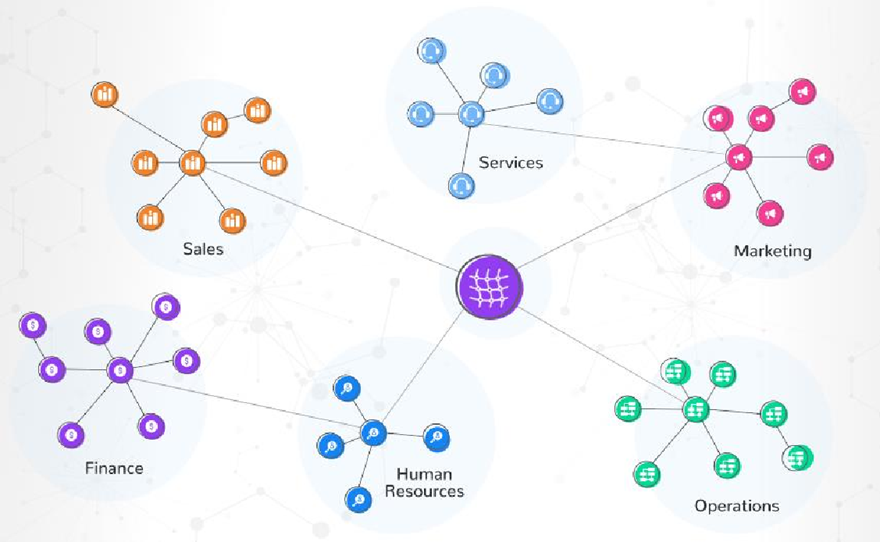
In modern data architectures, Data Mesh has emerged as a domain-driven analytical framework that shifts data management from a centralized model to a decentralized, federated approach. Unlike traditional Data Warehouses or Data Lakes, which rely on centralized control, Data Mesh promotes a model where data is treated as a product and owned by the teams that create and consume it. This paradigm enables organizations to scale data management effectively, democratizing data access while ensuring governance and consistency.
At its core, Data Mesh is built upon the principles of Domain-Driven Design (DDD), which recognizes that the teams generating data are best suited to manage and understand it. Instead of treating data as a byproduct of business processes, Data Mesh encourages domain-specific data ownership, where each domain (business function) is responsible for its own data pipelines, quality assurance, and governance.
A domain in the context of Data Mesh refers to a high-level category aligned with a business function, such as Sales, Marketing, Finance, or Customer Support. Unlike applications or systems, which can be cross-functional, domains are clearly defined and operate within their own boundaries. Each domain is responsible for:
- Managing its own data pipelines on a common infrastructure.
- Exposing domain-specific data or actions through well-defined APIs.
- Ensuring high-quality, governed, and discoverable data products that can be shared with other domains.
This approach reduces the bottlenecks caused by centralized IT or data teams, empowering individual business units to be more autonomous, efficient, and innovative in their data operations.
The implementation of a Data Mesh architecture provides significant advantages across three key areas: business democratization, data management, and organizational collaboration.

- Business Democratization
- By adopting a self-service approach, organizations can reduce reliance on centralized IT teams, allowing domain experts to manage and consume data more effectively.
- Teams can develop, share, and reuse data products without unnecessary bureaucratic constraints, improving decision-making speed and business agility.
- Data Management Simplification
- Traditional data architectures often struggle with data silos, slow processing times, and governance issues. Data Mesh simplifies these processes by ensuring each domain independently organizes, processes, and governs its data while still maintaining interoperability.
- The use of standardized infrastructure allows domains to apply consistent security, governance, and compliance policies without introducing inefficiencies.
- Organizational Collaboration and Data Product Exchange
- Data Mesh promotes seamless collaboration between data producers and consumers, enabling domains to publish and consume data products efficiently.
- This exchange of data is managed through well-defined APIs and metadata catalogs, ensuring that data products are discoverable, reusable, and compliant with regulatory requirements.
Data Mesh vs. Data Warehouse vs. Data Lake
One of the biggest distinctions between Data Mesh, Data Warehouse, and Data Lake is their approach to centralization and decentralization.
Feature Data Warehouse Data Lake Data Mesh Data Management Approach Centralized Centralized Decentralized Structure Schema-on-write Schema-on-read Domain-based ownership Data Type Structured Raw, structured & unstructured Mixed (structured & unstructured) Primary Use Cases Business intelligence, reporting Advanced analytics, machine learning Domain-specific data products Scalability Limited by centralized architecture High (raw data storage) High (distributed ownership) Flexibility Low (fixed schema) Moderate (raw data storage but centralized) High (adaptable domain models) Governance Centralized control Requires strict governance Decentralized but with federated governance Data Warehouse and Data Lake are centralized models, meaning data is stored and managed in a single location, controlled by a central team. In contrast, Data Mesh promotes distributed data ownership, where domains independently manage and govern their own data.
A Data Warehouse requires data to be structured before ingestion (schema-on-write), making it rigid but optimized for fast analytical queries. On the other hand, a Data Lake stores raw data (schema-on-read), allowing flexibility but often leading to data swamps if not properly governed. Data Mesh enables teams to manage both structured and unstructured data within their domain, providing the flexibility of a Data Lake with the governance of a Data Warehouse.
Data Warehouses and Data Lakes can integrate into hybrid architectures, where structured data is moved from the Data Lake into a Warehouse for reporting. Data Mesh, however, focuses on building self-serve, domain-specific data products that evolve over time, aligning with business needs without disrupting the entire organization’s data ecosystem.
Data Mesh is particularly effective in environments where large-scale, domain-specific data management is essential. Some key use cases include:
- Enterprise-Wide Analytics and AI
- Organizations using AI and machine learning often require domain-specific feature engineering.
- Data Mesh enables data scientists and engineers within each domain to create high-quality, curated datasets for AI models while maintaining global consistency.
- Decentralized Financial Data Management
- In financial services, different departments (e.g., risk management, fraud detection, customer analytics) generate and consume data differently.
- Data Mesh allows each department to create self-serve financial data products, reducing dependency on centralized data teams.
- E-commerce and Retail Optimization
- Online marketplaces, supply chain management, and customer behavior analysis benefit from real-time, domain-specific data insights.
- Data Mesh enables independent management of supply chain data, customer interactions, and product performance within their respective domains.
- Healthcare and Life Sciences
- Patient records, clinical trial data, and pharmaceutical research require strict governance and domain-specific expertise.
- Data Mesh allows different healthcare units to manage their own data products while complying with industry regulations such as HIPAA and GDPR.
Data Governance
Data within an organization can be compared to a highly skilled football team, full of talented players capable of achieving great results. However, just as a team needs a coach to define strategies, ensure coordination, and enhance individual and collective performance, an organization needs a structured approach to managing its data effectively. This role is fulfilled by Data Governance, which serves as the guiding framework for a successful, data-driven enterprise.
Definition
Data Governance is a comprehensive framework comprising processes, roles, policies, standards, and metrics designed to ensure that data is used efficiently and effectively across an organization. It provides a structured approach to managing data assets, ensuring their accuracy, consistency, security, and compliance with regulatory requirements.
The goal of Data Governance is not only to maintain data integrity but also to transform raw information into a valuable strategic asset that enables better decision-making, fosters innovation, and supports business objectives.
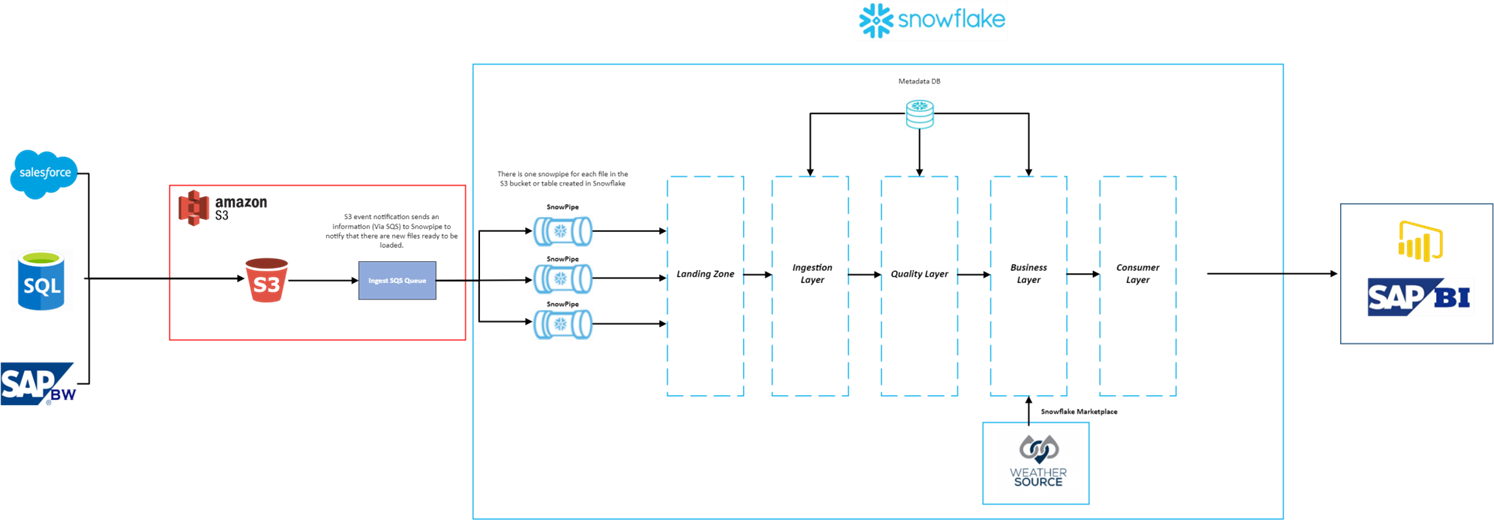
A well-implemented Data Governance strategy enables Data as a Service (DaaS) and Data Monetization, meaning that organizations can leverage their data to create new revenue streams and improve operational efficiencies. With well-governed data, businesses can enhance decision-making processes, regulatory compliance, and overall data accessibility, empowering different teams to work more effectively with reliable information.
The Core Pillars of Data Governance
To achieve an effective governance structure, organizations must focus on key pillars that ensure data integrity and usability. These pillars include Data Quality, Data Lineage, Data Privacy, and the Data Office, each playing a crucial role in managing the lifecycle of data within an enterprise.
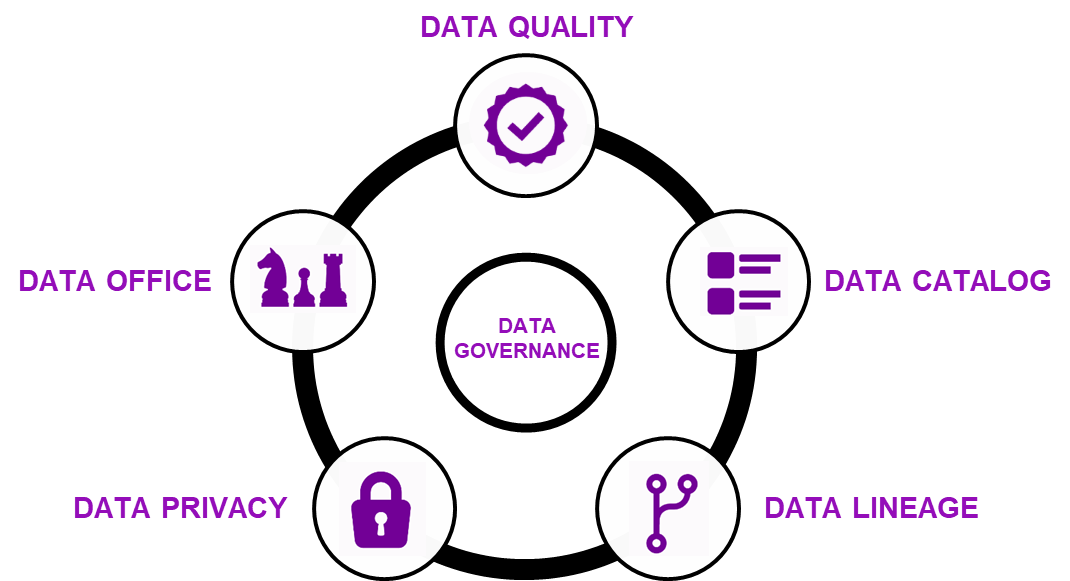
Data Quality
Data quality is a fundamental aspect of Data Governance, ensuring that data is accurate, complete, consistent, and timely. Poor data quality can lead to flawed decision-making, compliance issues, and inefficiencies across an organization.
A Data Quality Framework is designed to establish clear standards and methodologies for maintaining high-quality data. This involves defining parametric validation rules, specifying where and how these rules should be applied, and implementing automated logging and remediation mechanisms to track data quality issues.
A multi-layered approach is essential for data quality, applying different levels of validation and analytics at various stages of the data pipeline. By integrating machine learning techniques, organizations can implement Augmented Data Quality, where business rules are continuously refined through AI-driven insights.
Benefits of Data Quality Governance
- Ensures compliance with regulatory requirements.
- Enhances data accessibility and availability for decision-makers.
- Promotes reusability of high-quality data assets.
- Supports data democratization, allowing broader teams to access reliable data.
Data Lineage
Data Lineage refers to the ability to track the movement, transformation, and usage of data from its origin to its final destination. It provides a detailed map of how data flows across systems, who interacts with it, and how it changes over time. This transparency is crucial for ensuring data reliability, security, and impact analysis.
With a comprehensive Data Lineage solution, organizations can immediately assess the consequences of modifications within their data ecosystems. This is especially valuable in regulated industries, where knowing the exact location of sensitive data is essential for ensuring proper access controls and confidentiality.
Benefits of Data Lineage
- Strengthens compliance by ensuring complete traceability of data.
- Facilitates collaboration between different teams managing data assets.
- Improves data quality and consistency across multiple systems.
- Provides full control over data transformations and dependencies.
Data Privacy
With increasing regulatory requirements such as GDPR, CCPA, and HIPAA, data privacy has become a critical component of Data Governance. Organizations must implement robust strategies to protect sensitive data, prevent breaches, and ensure compliance with global privacy laws.
A Data Privacy Framework involves:
- Identifying and classifying sensitive data across the organization.
- Implementing encryption and anonymization techniques to protect critical information.
- Continuously monitoring data movements and access logs to detect and prevent unauthorized actions.
- Simulating remediation actions to assess vulnerabilities and reinforce security measures.
Benefits of Data Privacy Governance
- Ensures compliance with privacy regulations.
- Reduces the cost of remediation in the event of data breaches.
- Strengthens audit readiness for regulatory inspections.
The Data Office
A strong Data Governance framework cannot rely solely on technology; it requires well-defined roles and responsibilities within the organization. This is where the Data Office comes into play.
The Data Office is responsible for establishing data management policies, documentation standards, and monitoring processes to ensure the long-term sustainability of data governance initiatives. This team defines the best practices for data stewardship, compliance, and quality assurance, ensuring that all business units align with the overall governance strategy.
Some of the key roles within a Data Office include:
- Business Data Steward – Manages data from a business perspective, ensuring it aligns with organizational objectives.
- Technical Data Steward/Data Architect – Oversees the technical implementation of data governance policies within IT systems.
- Head of Data Management – Leads data governance strategies and ensures cross-functional collaboration.
- Data Owner – Maintains accountability for data quality and compliance.
- Data Operator – Handles the day-to-day operational aspects of data governance.
- Demand Officer – Prioritizes data governance initiatives based on business needs.
- Process Owner – Defines and optimizes data governance workflows.
A well-structured Data Office ensures that data governance is not just a set of abstract policies but an integral part of business operations.
Benefits of a Dedicated Data Office
- Improves compliance with governance frameworks.
- Maximizes the value of data assets for business growth.
- Enhances operational efficiency by streamlining data governance processes.
- Provides complete oversight and accountability for data-related activities.
Technology Solutions for Data Governance
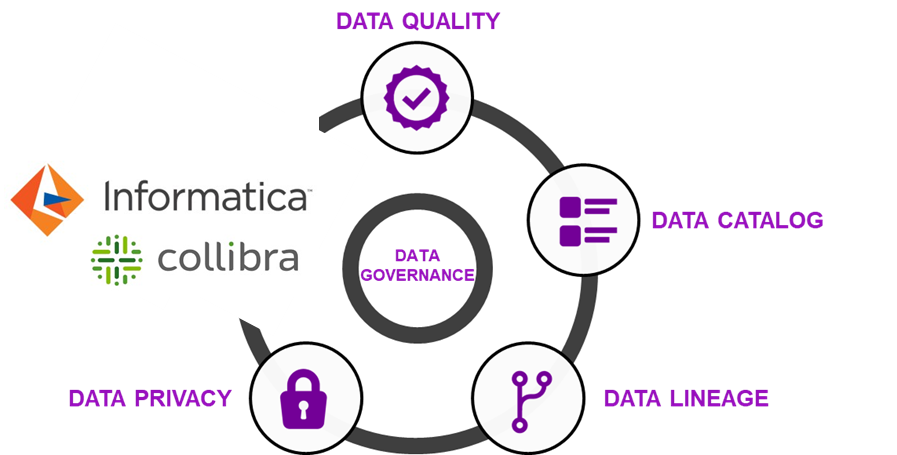
To implement an effective Data Governance strategy, organizations often leverage specialized technology solutions that provide automated tools for data quality, lineage, privacy, and cataloging. Platforms such as Informatica and Collibra offer end-to-end solutions for managing enterprise data governance at scale.
However, technology alone is not sufficient. A successful Data Governance approach requires a combination of technological solutions and well-defined governance structures, ensuring holistic data management across the organization.
Data-as-a-Service (DaaS)
In the modern data-driven economy, organizations seek innovative ways to make data accessible, reusable, and monetizable. Data-as-a-Service (DaaS) is a framework that enables seamless access to high-quality data and analytics across all departments, ensuring global availability, cost efficiency, and streamlined data management. By adopting DaaS, companies eliminate data silos, reduce redundancy, and lower costs by centralizing their data assets into a unified ecosystem.
With a single update point, businesses can efficiently modify, enrich, and share data across multiple teams and applications, fostering collaboration and agility. This approach simplifies the delivery of data-driven projects, accelerating time-to-market for new initiatives and making enterprise data easily accessible and actionable.
Key Benefits of Data-as-a-Service
- Faster Project Delivery – Reduces time-to-market for data-driven initiatives.
- Cost Optimization – Minimizes storage and processing costs by eliminating redundant data silos.
- Global Accessibility – Ensures secure, anytime-anywhere access to data for employees and stakeholders.
- Simplified Administration – Facilitates efficient data governance, compliance, and collaboration across teams.
Data Monetization
Beyond internal use, companies can unlock new revenue streams by leveraging their data assets for external monetization. Data Monetization shifts the perspective on data from being a mere operational resource to becoming a valuable commercial product.
With centralized, high-quality, and well-governed data, businesses can extract actionable insights and sell these insights to external partners, industries, and marketplaces. This enables organizations to transition from being data-driven (where data supports decisions) to becoming data drivers (where data itself becomes a product and competitive differentiator).
Advantages of Data Monetization
- Creates new revenue streams by selling insights to other businesses.
- Strengthens market positioning by leveraging proprietary data.
- Enhances strategic partnerships through data-sharing agreements.
- Transforms companies into data-driven enterprises that capitalize on information assets.
The Data-as-a-Service Framework
To successfully implement DaaS and Data Monetization, businesses must follow a structured framework that integrates strategy, technology, and governance.
To successfully implement Data-as-a-Service (DaaS) and Data Monetization, businesses must follow a structured framework that integrates strategy, technology, and governance.
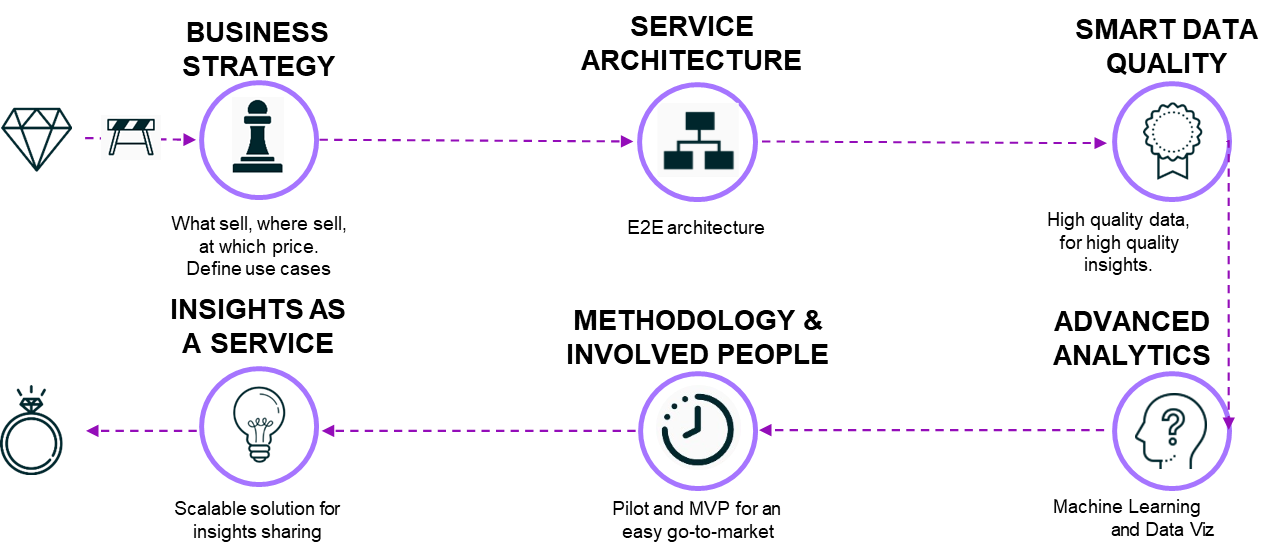
First, it is essential to define what data to sell, where to sell it, and at what price. Identifying relevant use cases for internal and external data applications is crucial for maximizing the value of data assets. Next, developing an end-to-end (E2E) architecture ensures scalable and efficient data distribution. Implementing APIs and cloud-based infrastructures facilitates real-time data access, making it easier for different departments and external partners to leverage the data.
Ensuring high-quality, validated, and enriched data is fundamental to generating reliable insights. Adopting automated data cleansing, normalization, and validation mechanisms helps maintain data integrity and usability.
Integrating Machine Learning models and Data Visualization tools is vital for extracting valuable insights. Leveraging AI-driven analytics enables predictive and prescriptive decision-making, providing a competitive edge in the market. Implementing a pilot program and Minimum Viable Product (MVP) allows for a controlled market entry. Engaging data scientists, engineers, and business strategists is essential to drive the initiative and ensure its success.
Finally, developing a scalable model that allows businesses to offer insights as a subscription-based or on-demand service can create new revenue streams. Creating industry-specific dashboards, reports, and predictive analytics tools for customers enhances the value proposition and supports data monetization efforts.